
Endocrine surgery focuses on the surgical treatment of glands that produce hormones, particularly the thyroid and parathyroid glands located in the neck. The Advanced Head and Neck, Cranial / Orbital / Maxillofacial Surgery Program at Scripps Prebys Cancer Center offers expert endocrine surgery services through Dr. Perry Mansfield and Dr. Kevin Brumund, who have extensive experience in thyroid and parathyroid procedures using the latest surgical techniques and technology.
Understanding Endocrine Surgery of the Head and Neck
The thyroid gland, located at the base of the neck, produces hormones that regulate metabolism, growth, and development. The four parathyroid glands, typically positioned behind the thyroid, control calcium levels in the blood and bones. When these glands develop tumors, become overactive, or malfunction, surgery may be necessary to restore normal function and protect overall health.
Endocrine surgery requires meticulous technique and thorough understanding of neck anatomy. Critical structures including the recurrent laryngeal nerves (which control the vocal cords), the superior laryngeal nerves (which affect voice quality), and the parathyroid glands (when preserving them during thyroid surgery) must be carefully protected. Our surgeons' specialized training and extensive experience ensure the highest level of care during these delicate procedures.
Thyroid Surgery
Thyroid surgery, or thyroidectomy, involves removing all or part of the thyroid gland. Conditions requiring thyroid surgery include thyroid cancer, suspicious thyroid nodules that may be cancerous, large goiters causing compression of the windpipe or esophagus, hyperthyroidism (overactive thyroid) not controlled with medication, and Graves' disease.
Dr. Perry Mansfield and Dr. Kevin Brumund perform both partial thyroidectomy (removing one lobe) and total thyroidectomy (removing the entire gland) depending on the specific condition. Dr. Perry Mansfield has performed thousands of thyroid operations throughout his three-decade career and has published extensively on thyroid tumor management. Dr. Kevin Brumund has two decades of experience and expertise in the surgical treatment of both benign and malignant thyroid conditions and utilizes cutting-edge technology to enhance surgical precision. He has performed over one thousand thyroid surgeries, the majority for thyroid cancer.
The decision about how much thyroid tissue to remove depends on several factors including the diagnosis, size and location of nodules, whether cancer is present, and patient-specific considerations. During your consultation, your surgeon will explain the recommended approach and why it's most appropriate for your situation.
The mainstay of treatment for thyroid cancer is surgery. The extent of the surgery depends of several factors, including the size of the primary tumor and whether there is involvement of surrounding tissues, structures, or lymph nodes. Proper management of thyroid cancer in every individual requires an appropriate evaluation and work-up preoperatively to ensure the best surgical outcome. Dr. Kevin Brumund and Dr. Perry Mansfield work with a multidisciplinary team to determine the optimum treatment pathway for every individual patient.
Parathyroid Surgery
Parathyroid surgery addresses problems with the small glands in the neck that regulate calcium. The most common condition requiring parathyroid surgery is primary hyperparathyroidism, where one or more parathyroid glands become overactive and produce excessive parathyroid hormone. This leads to elevated blood calcium levels, which can cause kidney stones, bone loss, fatigue, depression, and other symptoms.
Parathyroid surgery, called parathyroidectomy, involves removing the overactive gland or glands while preserving the normal ones. This surgery is highly effective, most patients experience immediate normalization of calcium levels and resolution of symptoms within 24 hours of a successful operation. Our surgeons use various techniques to locate abnormal parathyroid glands, including advanced preoperative imaging and intraoperative parathyroid hormone monitoring to confirm successful removal.
Minimally Invasive Approaches
When appropriate, our surgeons utilize minimally invasive techniques for both thyroid and parathyroid surgery. These approaches use smaller incisions, often resulting in less pain, faster recovery, and improved cosmetic outcomes. Many patients are candidates for outpatient surgery and can safely go home the same day. However, not all patients are candidates for minimally invasive surgery. The decision depends on factors such as gland size, presence of cancer, and previous neck surgery or radiation.
Advanced Technology and Precision
Our program employs several technologies to enhance surgical safety and outcomes. Intraoperative nerve monitoring helps identify and protect the recurrent laryngeal nerves during surgery, reducing the risk of voice changes. For parathyroid surgery, advanced preoperative imaging often localizes the offending, hyperfunctional gland, allowing for a directed, minimally invasive surgical procedure and intraoperative parathyroid hormone monitoring confirms that the overactive gland has been successfully removed. High-definition magnification and precision instruments allow meticulous dissection and preservation of critical structures.
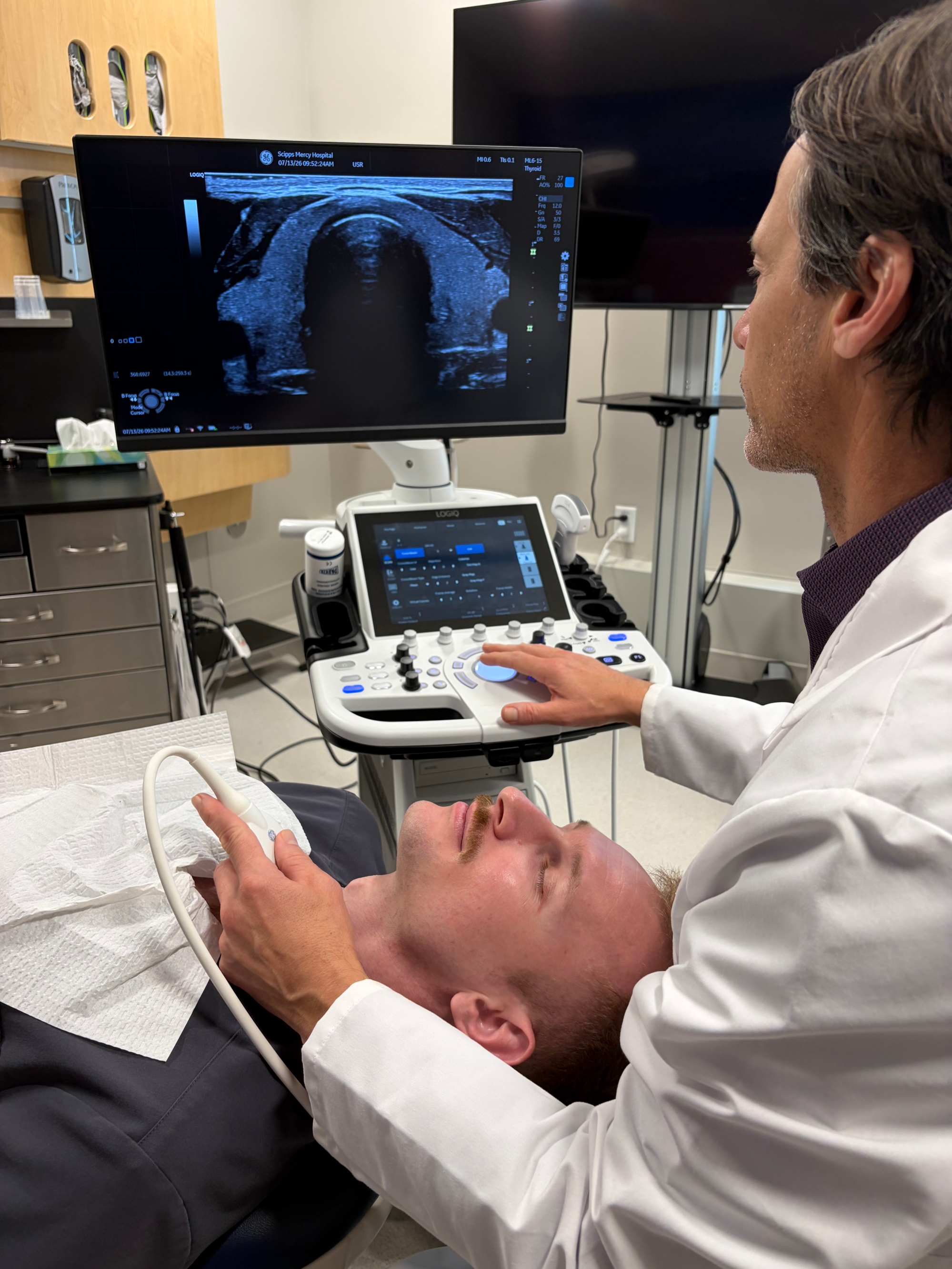
A significant aspect of Dr. Kevin Brumund's clinical practice is the use of point of care ultrasound (POCUS). Use of ultrasound during a patient visit allows Dr. Kevin Brumund to obtain real time information and provide assessment for various pathologies; including all neck masses, thyroid nodules and cancers, enlarged lymph nodes, and hyperactive parathyroid glands, If needed, POCUS also gives Dr. Kevin Brumund the ability to do a needle biopsy at the same sitting – no more multiple visits. Dr. Kevin Brumund is a renowned expert in head and neck ultrasound and has been giving lectures and teaching courses nationally and internationally on the subject for over a decade.
Dr. Perry Mansfield's expertise with novel AI software applications enhances surgical planning and execution, representing the cutting edge of endocrine surgery technology.
What to Expect
Your journey begins with comprehensive evaluation including blood tests to assess hormone and calcium levels, imaging studies such as ultrasound, CT scans, or or specialized nuclear medicine scans, and detailed consultation with your surgeon. Most endocrine surgery is performed as outpatient or 23-hour observation, meaning you typically go home the same day or the following morning.
Surgery is performed under general anesthesia and typically takes one to three hours depending on complexity. Incisions are made in the natural neck crease to minimize visible scarring. Most patients experience manageable discomfort after surgery and return to normal activities within one to two weeks.
Following thyroid surgery, you'll need regular monitoring of thyroid hormone levels and may require thyroid hormone replacement medication. After parathyroid surgery, calcium levels are monitored to ensure they normalize appropriately. Your surgeon will provide detailed post-operative instructions and schedule appropriate follow-up appointments.
Insurance Coverage
Endocrine surgery for medical conditions is covered by medical insurance when medically necessary. Our team handles the insurance authorization process, submitting required documentation and working with your insurance company to facilitate approval. We're committed to ensuring that insurance concerns don't delay necessary treatment.
Expertise in Endocrine Surgery
Dr. Perry Mansfield's and Dr. Kevin Brumund's decades of experience and extensive publication record , combined with their surgical expertise in benign and malignant thyroid and parathyroid conditions, ensure you receive exceptional care. Our program's integration within Scripps Prebys Cancer Center provides access to comprehensive endocrinology services and multidisciplinary support when needed.
If you're experiencing symptoms of thyroid or parathyroid disease, have been diagnosed with a thyroid nodule, thyroid cancer, hyperparathyroidism, or need expert evaluation of an endocrine condition, contact us to schedule a consultation.