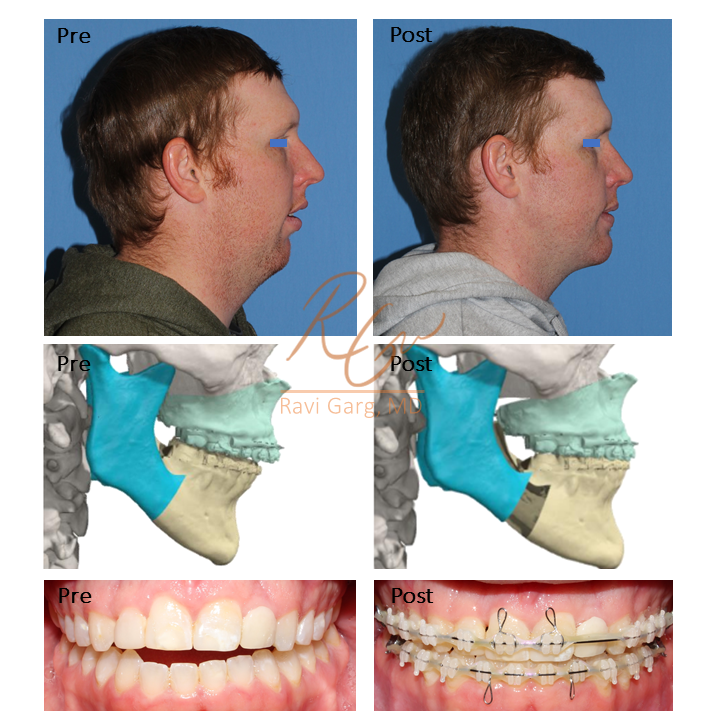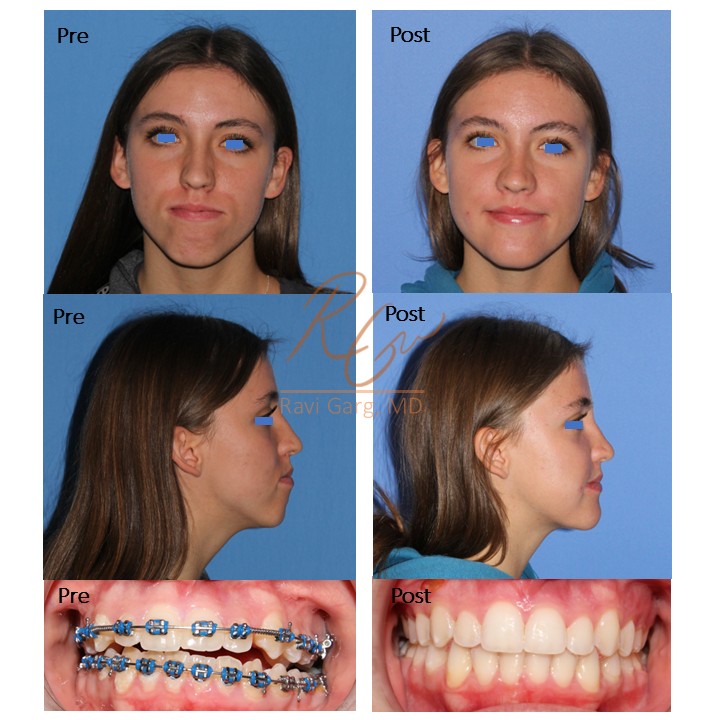
Orthognathic jaw surgery is a specialized procedure that corrects misalignments of the jaw and facial bones, restoring proper function and improving facial harmony. At the Advanced Head and Neck, Cranial / Orbital / Maxillofacial Surgery Program at Scripps Prebys Cancer Center, Dr. Ravi Garg and our expert surgical team provide comprehensive care for patients requiring corrective jaw surgery using state-of-the-art computer-aided surgical planning technology.
What Is Orthognathic Jaw Surgery?
Orthognathic surgery, also known as corrective jaw surgery, repositions the upper jaw (maxilla), lower jaw (mandible), or both to correct skeletal irregularities that affect function and appearance. Unlike orthodontic treatment alone, which moves only teeth, orthognathic surgery addresses the underlying bone structure to resolve issues that braces cannot fix.
This surgery is recommended for patients with significant jaw misalignment affecting their ability to chew, speak, or breathe, as well as those experiencing chronic jaw pain. Common conditions that would benefit from orthognathic surgery include severe underbites or overbites, facial asymmetry, obstructive sleep apnea, and advanced degenerative TMJ disorders.
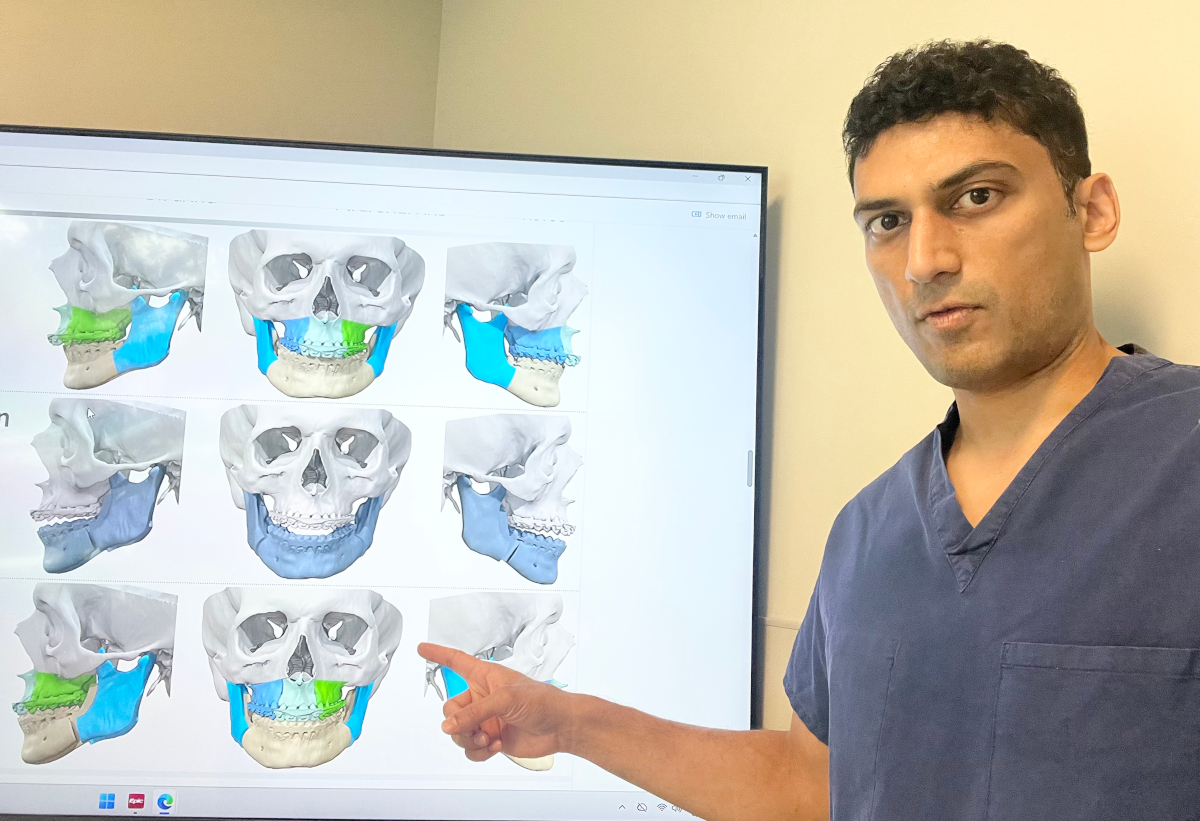
Dr. Ravi Garg utilizes cutting-edge computer-aided design and manufacturing technology to virtually plan each surgery before entering the operating room. This advanced planning ensures precision, minimizes risk, and optimizes both functional and aesthetic outcomes. The procedure is performed under general anesthesia, typically taking two to four hours, with incisions made inside the mouth to avoid external scarring.
The Treatment Process
Your journey begins with a thorough physical exam, review of imaging, and a comprehensive discussion regarding details of surgery, recovery, benefits, and risks. Most patients undergo pre-surgical orthodontics for 12 to 18 months to prepare the teeth for jaw repositioning. Some patients have a shorter pre-surgical orthodontic phase of treatment. Following surgery, patients are typically observed in the hospital for one night, with most returning to work or school within two to three weeks. Post-surgical orthodontics continue for several months to fine-tune the bite and ensure optimal alignment.
Frequently Asked Questions
How do I know if I need jaw surgery?
Candidates typically experience functional problems that cannot be corrected with orthodontics alone, such as difficulty chewing and/or speaking, chronic jaw pain, breathing problems, and/or significant facial asymmetry. A consultation with Dr. Ravi Garg will determine whether surgery is appropriate for your condition.
How do I know if I have an airway restriction?
Our team has extensive experience with complex airway management. We will discuss your airway concerns, perform a comprehensive physical exam, review the airway outcomes data, and be able to order additional tests such as a sleep study to develop a treatment plan that is individualized to the patient.
What if I have severe temporomandibular joint (TMJ) disease?
In some scenarios, there may be an indication to replace the TMJ with a custom alloplastic joint replacement as part of the surgery.
How long is recovery?
Initial recovery takes two to three weeks, with most patients returning to normal activities with some restrictions. Most patients progress quickly from a liquid to a soft diet during healing, and final surgical results become apparent around six to twelve months post-operatively.
Will my insurance cover this?
When medically necessary, orthognathic surgery is typically covered under medical insurance. Our team has extensive experience navigating this coverage - see below for details.
Insurance Coverage:
One of the benefits of choosing our program is our expertise in securing insurance coverage for orthognathic surgery through medical insurance. When jaw surgery addresses functional problems such as difficulty eating, breathing issues, sleep apnea, or chronic pain, it usually qualifies as medically necessary and is often covered under medical insurance.
Our team handles the entire authorization process for you. We submit your case with comprehensive documentation demonstrating medical necessity and work directly with your insurance plan to secure approval. Our goal is to make this life changing procedure accessible to patients who need it through their medical insurance.
We encourage you to schedule a consultation even if you have insurance concerns. Our staff will verify your benefits, explain your coverage, and do our best to work with your insurance plan to obtain authorization for surgery.
Expert Care Using Advanced Technology
Dr. Ravi Garg's specialized training in complex cranio/maxillofacial surgery, combined with sophisticated computer-aided planning, ensures exceptional outcomes. Our location within Scripps Prebys Cancer Center provides access to comprehensive multidisciplinary resources and state-of-the-art facilities.
If you're experiencing jaw misalignment or functional difficulties that may require surgical correction, contact us to schedule a consultation and learn how we can help restore your quality of life.