
Skull base surgery addresses complex tumors and conditions affecting the region where the brain meets the facial structures and neck. The Advanced Head and Neck, Cranial / Orbital / Maxillofacial Surgery Program at Scripps Prebys Cancer Center offers specialized skull base surgery through our fellowship-trained team led by Dr. Perry Mansfield, combining decades of experience with advanced endoscopic and open surgical techniques to treat challenging conditions in this anatomically complex region.
Understanding Skull Base Surgery
The skull base is the bottom portion of the skull where the brain rests, serving as the foundation that separates the brain from the face and neck. This region contains numerous critical structures including major blood vessels, cranial nerves that control vision, hearing, swallowing, and facial movement, and openings through which the spinal cord and other nerves pass. Tumors, infections, or other conditions affecting this area require highly specialized surgical expertise due to the complexity and importance of surrounding structures.
Skull base surgery encompasses both endoscopic approaches, which access the skull base through the nose and sinuses without external incisions, and open approaches when necessary for larger or more extensive lesions. Dr. Perry Mansfield's and Dr. Kevin Brumund's extensive experience in both complex open and minimally invasive techniques positions our program to handle the full spectrum of skull base conditions.
Conditions Requiring Skull Base Surgery
Skull base surgery treats a variety of benign and malignant conditions. Tumors commonly addressed include pituitary adenomas, meningiomas, acoustic neuromas (vestibular schwannomas), chordomas, chondrosarcomas, sinonasal tumors extending to the skull base, and various other primary skull base tumors and metastatic lesions.
Beyond tumors, skull base surgery may be necessary for cerebrospinal fluid (CSF) leaks where fluid surrounding the brain leaks through defects in the skull base, encephaloceles (protrusion of brain tissue through skull defects), severe sinus infections affecting the skull base, and vascular malformations in the skull base region.
Endoscopic Skull Base Surgery
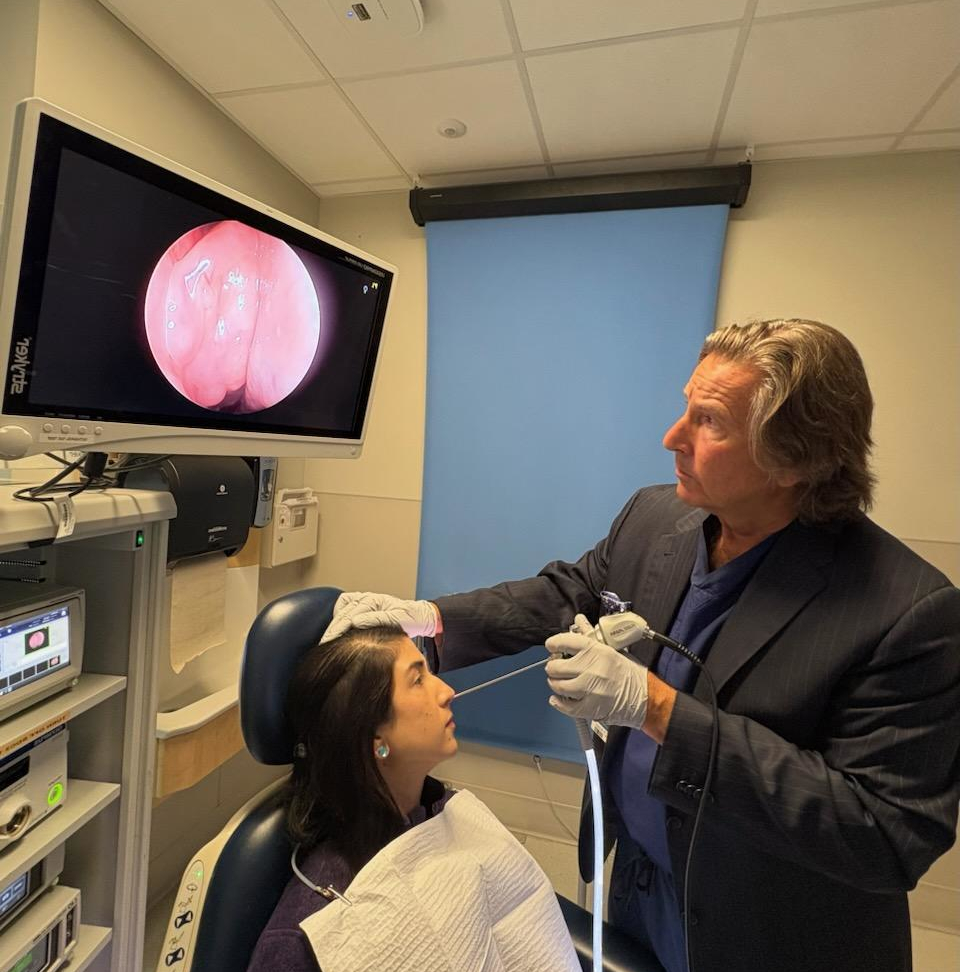
Endoscopic approaches to the skull base represent one of the most significant advances in neurosurgical and head and neck surgery over the past two decades. Using specialized endoscopes, thin tubes with high-definition cameras, surgeons can access the skull base through the nose and sinuses, avoiding facial incisions and brain retraction that traditional open approaches required.
Dr. Perry Mansfield's expertise in endoscopic nasal surgery extends to complex skull base lesions. Endoscopic skull base surgery offers several advantages including no external incisions or scars, reduced post-operative pain, shorter hospital stays (often 1-3 days compared to a week or more for open approaches), and faster recovery with quicker return to normal activities. The high-definition visualization provided by modern endoscopes allows excellent view of critical structures and precise tumor removal.
Not all skull base tumors are appropriate for endoscopic approaches. Factors determining the surgical approach include tumor size and location, involvement of critical structures, previous surgery or radiation, and specific tumor characteristics. Your surgeon will thoroughly evaluate your imaging studies and discuss which approach is most appropriate for your situation.
Open Skull Base Approaches
When tumors are too large or located where endoscopic access is limited, open skull base surgery may be necessary. These approaches involve larger incisions and may require collaboration with neurosurgeons. Open approaches allow access to lateral skull base tumors, extensive lesions requiring wide exposure, tumors involving multiple compartments, and revision surgery for recurrent tumors.
Dr. Perry Mansfield's and Dr. Kevin Brumund's extensive experience in complex open techniques ensures that patients requiring these more invasive approaches receive expert care. The goal remains the same regardless of approach: complete tumor removal while preserving neurological function and quality of life.
Multidisciplinary Collaboration
Skull base surgery often requires collaboration between head and neck surgeons, neurosurgeons, and other specialists. Our program's location within Scripps Prebys Cancer Center facilitates these collaborations, ensuring access to comprehensive expertise when needed. This multidisciplinary approach is particularly important for complex cases requiring input from multiple specialists.
Advanced Surgical Planning
Modern skull base surgery benefits from sophisticated imaging and planning. High-resolution CT and MRI scans provide detailed anatomical information, while image guidance systems can be used during surgery to navigate complex anatomy safely. This technology allows real-time correlation between the surgical field and preoperative imaging, enhancing precision and safety.
Recovery and Outcomes
Recovery from skull base surgery varies based on the surgical approach and extent of the procedure. Endoscopic skull base surgery typically involves 1-3 days hospitalization, with patients returning to normal activities within 2-4 weeks. Nasal care is important during healing, and some patients require nasal packing that is removed after a few days.
Open skull base surgery requires longer hospitalization, typically 5-7 days, with recovery extending 6-8 weeks before return to normal activities. Specific restrictions depend on the surgical approach and whether any skull base reconstruction was necessary.
Some patients experience temporary neurological symptoms related to nerve manipulation during surgery, but these typically improve as swelling resolves. Regular follow-up with imaging monitors for any tumor recurrence and ensures proper healing.
Insurance Coverage
Skull base surgery for tumors and other medical conditions is covered by medical insurance. Our team manages the insurance authorization process, compiling necessary documentation including imaging studies and clinical information to demonstrate medical necessity. We work directly with your insurance company to secure approval and facilitate your treatment.
Expert Care for Complex Conditions
Dr. Perry Mansfield's three decades of experience in complex head and neck surgery, including performance of four first-in-man procedures and over 12,000 operations, provides patients with access to truly exceptional expertise. His published work on skull base conditions and novel surgical approaches reflects his commitment to advancing the field while delivering outstanding patient care.
Dr. Kevin Brumund is a fellowship-trained skull base surgeon with two decades of experience caring for patients needing open surgery for safe removal of skull base tumors.
If you've been diagnosed with a skull base tumor or condition, or if you're seeking a second opinion, we invite you to schedule a consultation to discuss your treatment options.